

A bad POS or kiosk installation is rarely filed as a bad install. It is filed as a bad product. This fact should reshape how hardware manufacturers think about installation. If you sell hardware to franchise networks, multi-location retail, or quick-serve restaurants (QSR), you have a post-sale blind spot. Once your hardware ships, the installation is handled by a fragmented network of value-added resellers (VARs) and local IT contacts with no standardized oversight. When these installs fail, the return label points back to you.
So what does a field service management partner do for hardware manufacturers? A dedicated partner manages the entire post-sale deployment. This includes pre-staging hardware, executing on-site installation and configuration, verifying network connectivity, and providing post-install support. This is the core of strong field service management. Unlike a VAR that bundles installation with other services, a field service partner takes single-point accountability for the installation outcome at every location.
The stakes are higher than most manufacturers realize. Only 5% of returned electronics have confirmed manufacturing defects (Supply Chain Executive, 2026). The other 68% are classified as "No Fault Found" (NFF), meaning the hardware was returned in full working order (Supply Chain Executive, 2026). The main cause is setup and installation failure.
This blog breaks down what the field service gap costs you, why VAR networks create inconsistent deployment quality, and what a dedicated field service partner does differently.
Why POS and Kiosk Installations Fail
Most hardware manufacturers do not manage their own installations. They rely on a network of channel partners to handle delivery and configuration. The numbers show why this model produces inconsistent results.
Around 80% of manufacturers use intermediaries like distributors, dealers, and VARs to deploy hardware (Manufacturing, 2026). There are over 500,000 active VARs globally, each with different technician certification standards (Channelyze, 2026). On top of that, the average corporate buyer works with over six partner organizations at once (Digital Applied, 2026). With so many parties involved, no single one owns the result.
This raises a question: what is the difference between a VAR and a dedicated field service partner? A VAR, or Value Added Reseller, is mainly a resale partner, and installation is often an add-on, not a core competency. A dedicated field service partner is accountable only for execution quality and installation outcomes. The key distinction is accountability.
When accountability is missing, installations fail, and failures become returns. In fact, 65% of consumers who returned non-defective hardware did so because they struggled with setup (TechSee, 2026). Here is what typically breaks in the channel model:
- No standardized installation checklist across VARs
- Variable technician certification from one market to another
- No photographic or digital verification of completed installs
- Local store staff tasked with operating hardware they were not trained on
- No centralized record of assets, leading to inventory gaps (CybrIQ, 2026)
- Security risks, such as kiosks connected to the wrong network (CybrIQ, 2026)
The store environment can also cause problems. About 80% of No Fault Found (NFF) returns are due to conditions like humidity, dust, and temperature swings (ResearchGate, 2026). When employees cannot distinguish a hardware defect from an environmental issue, they start a return, and you absorb the cost.
The Financial Cost of a Broken Post-Sale Model
A failed installation is a direct hit to your profit margin. To understand this, start with the first time fix rate (FTFR), which measures the percentage of calls resolved on the first visit. The industry average is 75% to 77%, while best-in-class organizations reach 88% to 89% (Limble, 2026). Netfor consistently delivers a 95% first-time fix rate.
Every failure has a price:
- Unresolved service calls require an average of 1.6 extra visits (PTC, 2026)
- A single truck roll costs between $150 and $1,000 (CareAR / TSIA via Help Lightning, 2026)
- 20% to 30% of failed visits are caused by incorrect address information alone (Smarty, 2026)
Most failed dispatches result from a few preventable causes (Dynamics 365 Community, 2026):
- Parts unavailability (51%): The technician arrives without the correct component.
- Technician training deficits (25%): The tech is not certified for the specific hardware.
- Time constraint failures (13%): The schedule did not account for site complexity.
- Information deficits (19%): The work order had incorrect data.
Now, connect this to customer acquisition cost (CAC). The average B2B hardware CAC is $100 to $182 (Financial Models Lab, 2026). If a terminal fails in the first 30 days due to an install error, you must either send a technician or process a return. This failure can double or triple your CAC and turn a profitable account into a loss. Strong POS installation services protect more than uptime; they protect your gross margin.
From a Fragmented Channel to Single-Point Accountability
The solution is not more VARs. It is consolidating accountability with one partner who owns the entire deployment lifecycle. This shift changes the economics by replacing guesswork with consistency.
A professional retail hardware deployment is structured and repeatable. Here is what it includes:
- Pre-staging and configuration before hardware ships
- Certified technicians dispatched for the specific job
- Digital checklists with photo verification at key steps
- Network validation before the job is closed
- Real-time updates to a central asset registry
- A post-installhelp desk support pathway
- A single point of contact for everyone involved
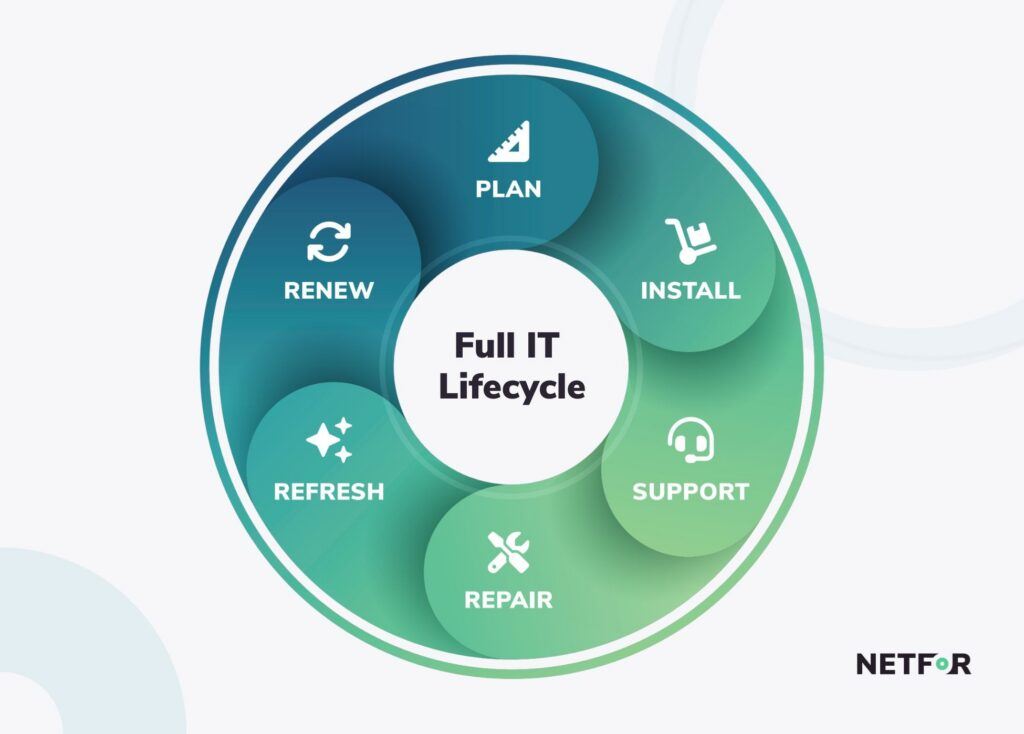
This is how hardware manufacturers can successfully support multi-location retail and franchise deployments. They use a dedicated field service partner who manages standardized protocols and provides a central visibility layer. This ensures every installation is done correctly. The partner owns the outcome at location 1 and location 847 with the same high standard.
The market urgency is clear. The global POS terminal market was valued at $123.15 billion in 2025 and is projected to reach $226.87 billion by 2033 (Grand View Research, 2026). The global self-service kiosk installation market is projected to grow from $39.49 billion in 2025 to $145.58 billion by 2034 (Fortune Business Insights, 2026). Getting the installation layer right has a measurable payoff. A full 83% of commercial equipment buyers are highly likely to repurchase from manufacturers that provide excellent after-sales service (IASTX, 2026). The install layer is not a cost center. It is a profitable part of the business when managed well.
The Netfor and The UPS Store
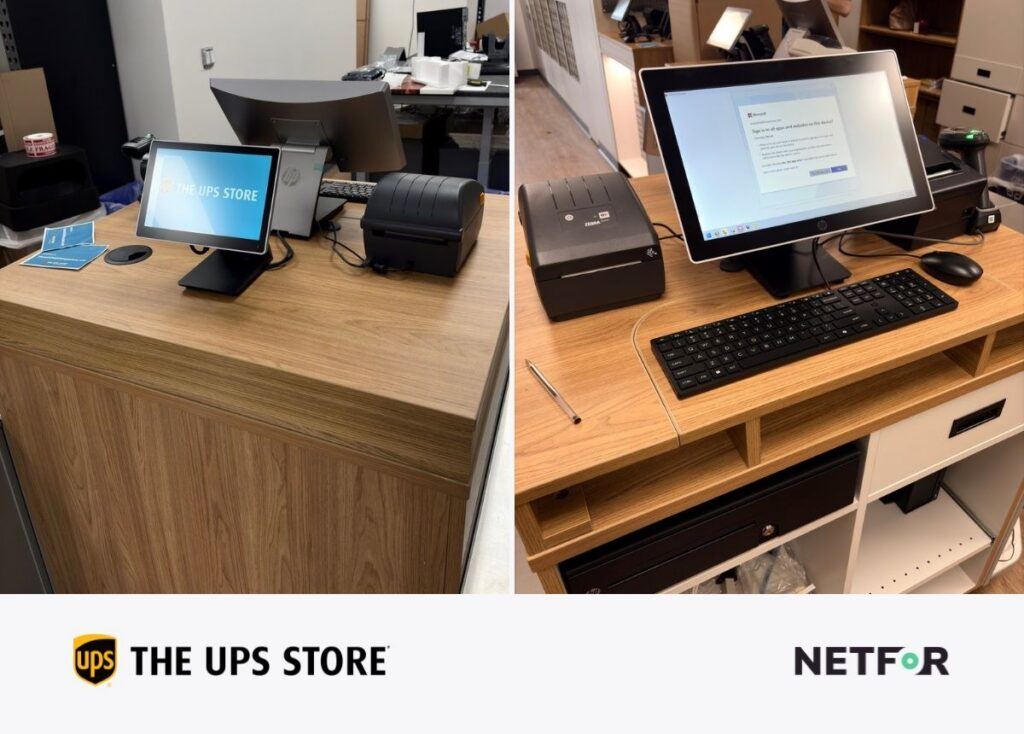
Netfor supports The UPS Store franchise network with field services, staging, and help desk support. This single-partner, full-lifecycle ownership delivers consistent execution at scale across nationwide field services. This is something fragmented channel models cannot provide, and it allows manufacturers to protect both margins and reputation.
Read the full success story here: The UPS Store Case Study
The Install Is Where Your Brand Reputation Lives
For hardware manufacturers, the post-sale installation is a brand and revenue issue. The data shows a clear story:
- Your brand reputation is won or lost during installation
- 68% of returned hardware has no defect, pointing to installation as the real problem (Supply Chain Executive, 2026)
- A fragmented model creates financial penalties from truck rolls, warranty claims, and lost reorders
- The solution is one accountable partner with a proven first-run fix rate and full lifecycle ownership
Netfor brings a certified field service management model to POS, digital signage, and kiosk deployments, backed by proven performance data from supporting The UPS Store network. That is the difference between a vendor that claims nationwide coverage and a partner that delivers it.
Ready to close the field service gap? Explore the Netfor Field Services page to see how single-point accountability can protect your margins and reputation.