

Long hold times, confusing phone trees, and misrouted calls are not just customer experience issues. They are operational failures that cost revenue. As call volumes spike during outages, peak seasons, and multi-location incidents, traditional call centers simply cannot keep up.
Legacy IVR systems and static queues were built for predictable demand. They break under real-world conditions, flooding agents with low-value calls while critical issues wait in line. Companies looking to boost efficiency and protect revenue are turning to the AI call center. This approach does not simply automate conversations; it fixes the intake, routing, and escalation layers of customer support to ensure the right issues reach the right resource faster.
This guide explores how AI is reshaping modern call center operations. It focuses on how AI call center support improves customer experience from the first interaction to resolution, especially for retail, franchise, and multi-location organizations where revenue and customer trust are at stake.
Why Traditional Call Centers Fail Under Modern Demand
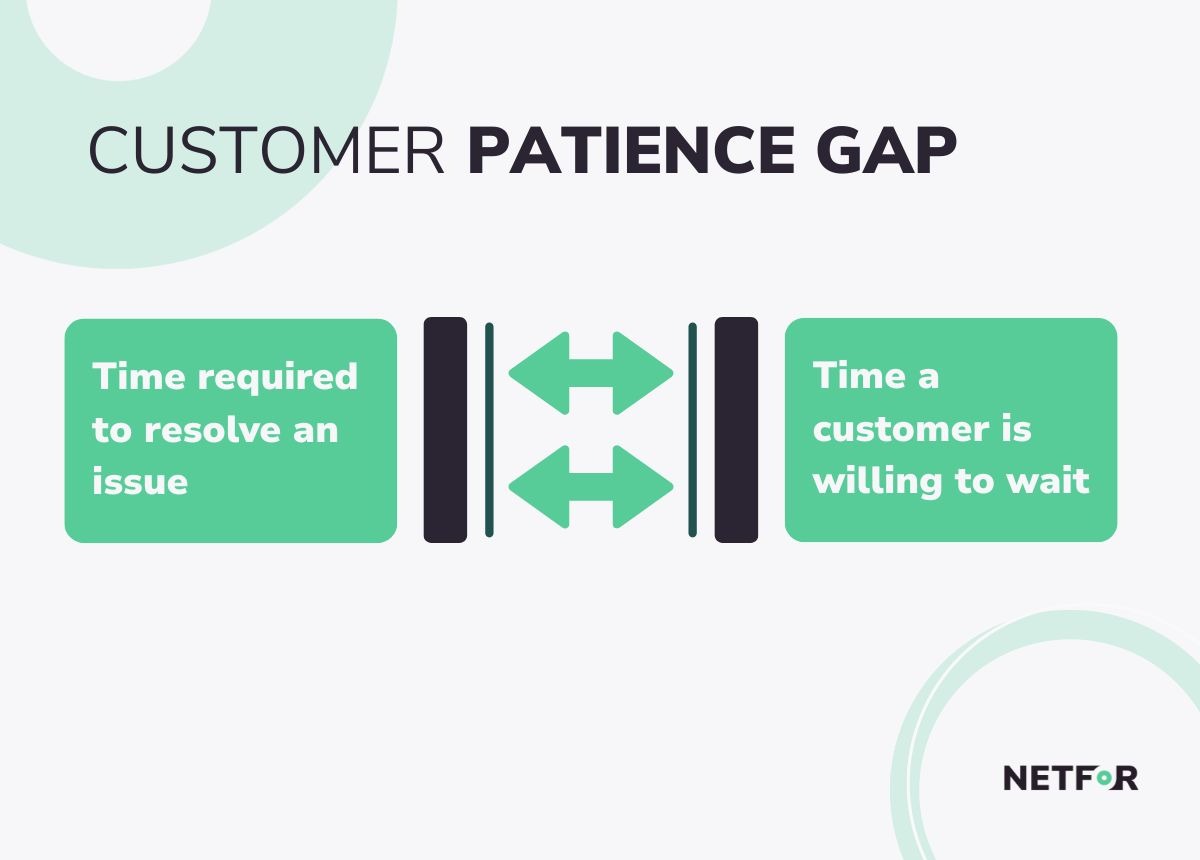
The fundamental metric governing the success of a contact center is the relationship between customer patience and operational velocity. Current industry benchmarks reveal a “patience gap” where the time required to resolve an issue via traditional methods exceeds the time a customer is willing to wait.
The Mathematics of Patience and Friction
The accepted industry standard for Average Speed of Answer (ASA) is 28 seconds or less (CMSWire, 2026). However, attaining this speed is becoming increasingly difficult as call complexity rises. The consequence of missing this window is severe. Data indicates that while some tolerance exists, the risk of call abandonment skyrockets after just a few minutes. More than half of callers disconnect after waiting on hold for up to eight minutes, but significant attrition occurs much earlier in the queue (Nextiva, 2026).
This abandonment behavior is not all the same. It is driven by the perceived value of the wait versus the urgency of the need. For retail franchises, long hold times are directly correlated with revenue loss. Fifty-six percent of consumers will switch to a competitor after a negative experience without ever complaining to the brand (Zendesk, 2026). This “silent churn” suggests that high abandonment rates are a leading indicator of future revenue decline.
Static Queues Prioritize Noise Over Urgency
Traditional call centers fail during peak demand because they rely on static queues and first-come-first-served logic. This allows low-value inquiries, such as simple status checks, to clog the lines. In the automotive service sector, analysis revealed that 18% of service calls are merely status checks on vehicles (Digital Dealer, 2026). Without call center AI to filter these out, revenue-generating calls remain stuck behind routine questions.
AI Call Intake: Replacing IVR With IVA
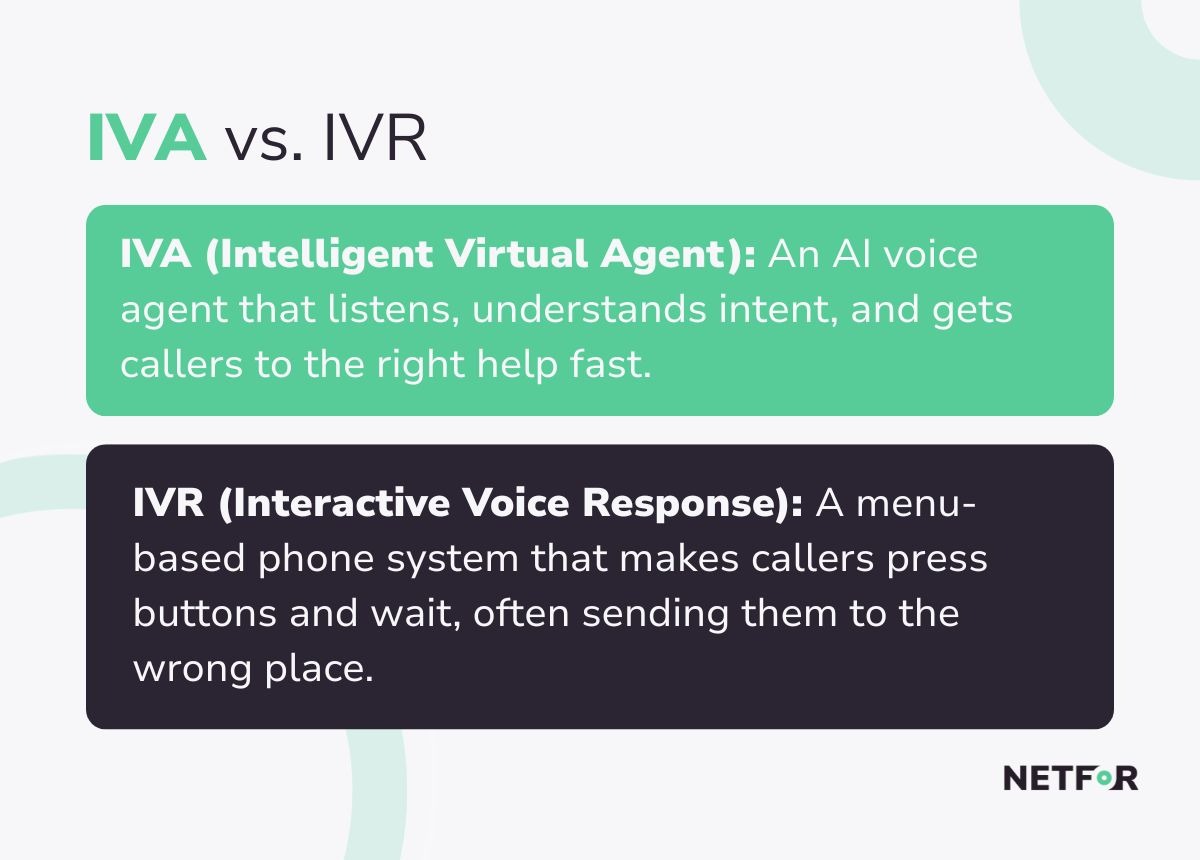
The traditional Interactive Voice Response (IVR) system, characterized by rigid menu trees like “Press 1 for Sales,” is a relic that actively degrades the customer experience. AI-powered call intake replaces these rigid menus with Intelligent Virtual Agents (IVAs) capable of Natural Language Understanding (NLU).
The “Maze of Options” and Misrouting
Legacy IVR systems operate on Dual-Tone Multi-Frequency (DTMF) technology, which forces customers to translate their complex problems into single-digit inputs. Research shows that traditional IVRs have “zero intent recognition,” forcing users through long, irrelevant menus (BizChat, 2026).
The containment rate for these legacy systems is often 30% or less (Assembled, 2026). This means 70% of calls “leak” through to agents, frequently arriving at the wrong department because the customer pressed “0” or selected a random option just to escape the menu. Misrouted calls are costly. They require transfers, and transferred calls significantly erode customer satisfaction (CSAT) and First Call Resolution (FCR).
Intelligent Intake Captures Context
Modern AI call intake solutions capture intent, urgency, and context immediately. Instead of navigating a maze, a customer simply states their problem. This capability, often referred to as Structured Intake, ensures that calls are routed correctly the first time, reducing call center hold times and preventing customers from repeating themselves.
Intelligent Call Routing and Queue Prioritization
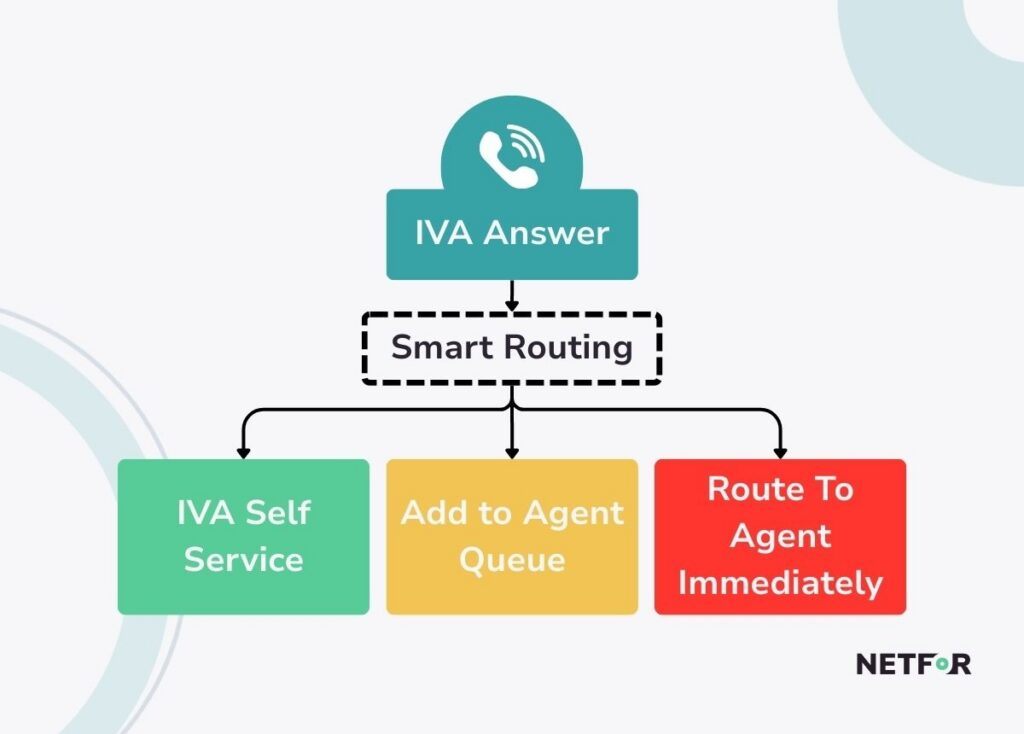
Once intent is established, the next critical step is routing. Intelligent call routing ensures that revenue-blocking or business-critical issues are handled first, not buried behind routine requests.
Prioritizing Revenue Over Routine
Revenue Blocking occurs when operational capacity limitations physically prevent a customer from completing a transaction. Unanswered calls are not just service failures; they are lost sales. For a service business with an average customer value of $5,000, missing 100 calls a month could theoretically result in over $3 million in lost annual revenue (Medium, 2026).
AI call routing allows organizations to implement priority call routing. If a customer calls about a payment failure or a “store down” situation, the AI identifies the urgency and bumps that call to the front of the queue. This call prioritization ensures that high-value interactions are never lost in the noise of general inquiries.
Dynamic Routing During Demand Shifts
Retail and franchise operations face unique surge patterns. AI queue management detects these patterns in real-time. It can dynamically adjust routing logic to handle the influx, perhaps by diverting non-urgent calls to voicemail or offering a callback, while keeping the lines open for immediate sales opportunities.
AI Escalation to Humans and Agent Enablement
The narrative that AI is replacing human agents is contradicted by the data. Instead, AI escalation to human agents is emerging as the only viable solution to the crisis of agent burnout and turnover.
The Context Gap and Agent Burnout
Agents can often spend a lot of time on low-value administrative tasks rather than solving customer problems. In a typical support interaction without AI augmentation, agents spend an average of 45 seconds gathering context and another 73 seconds searching for knowledge (Decagon, 2026).
This context gap forces customers to repeat their story, which is a primary driver of dissatisfaction. AI human handoff protocols ensure that when a call is escalated, the agent receives a full handoff packet containing the customer’s identity, intent, and sentiment.
Agent Copilot for Faster Resolution
AI call center solutions like Netfor’s Agent Copilot assist human agents in real-time. By surfacing knowledge instantly and automating the search time, AI reduces the cognitive load on agents. This allows agents to focus on empathy and problem-solving rather than data entry. Automation tools have been shown to reduce Average Handle Time (AHT) by up to 33% by handling conversation summaries and wrap-up tasks (InMoment, 2026).
Handling Call Surges, Outages, and Nationwide Incidents
While routine inefficiencies bleed revenue slowly, outages and system failures cause acute operational damage. For retail and service businesses, call volume spikes during these events defy manual management.
The Velocity of Volume Spikes
During major events like power outages or network failures, call volumes can spike by 300% to 600%. A peer-reviewed case study of a telecommunications network outage showed that outgoing call volume increased by 545% in the first hour (BKNIX, 2025). Manual staffing adjustments cannot respond fast enough to a 10x increase in load.
AI Call Overflow and Incident Management
Call surge management relies on AI call overflow capabilities. Through Workflow Orchestration, an AI system can detect a surge pattern, such as 100 calls about payment failure, in 5 minutes. It then activates an incident mode.
This mode can deploy a specific deflection message via Notifications to prevent the queue from collapsing. For example, customers calling about a known outage are greeted with a message confirming the issue and providing an estimated resolution time, deflecting the call without using agent capacity. This outage call handling strategy preserves the human workforce for complex issues that require critical thinking.
Transforming the Call Center Operation
AI call centers fix the intake, routing, and escalation layers of customer support. They move operations from a reactive posture, where agents are overwhelmed by static queues, to a proactive one where intelligent escalation and routing govern the flow of traffic.
For leaders in retail, franchise, and multi-store operations, the benefits are clear. AI call center support leads to reduced hold times, higher first-call resolution, and improved agent efficiency. It provides the resilience needed to weather outages and the intelligence required to treat every customer interaction according to its value and urgency.
The modernization of the call center is not just about installing new software. It is about closing the patience gap and ensuring that your infrastructure supports, rather than hinders, your revenue goals.
Take a look at our AI Call Center Capabilities or Book a Demo with our team.