
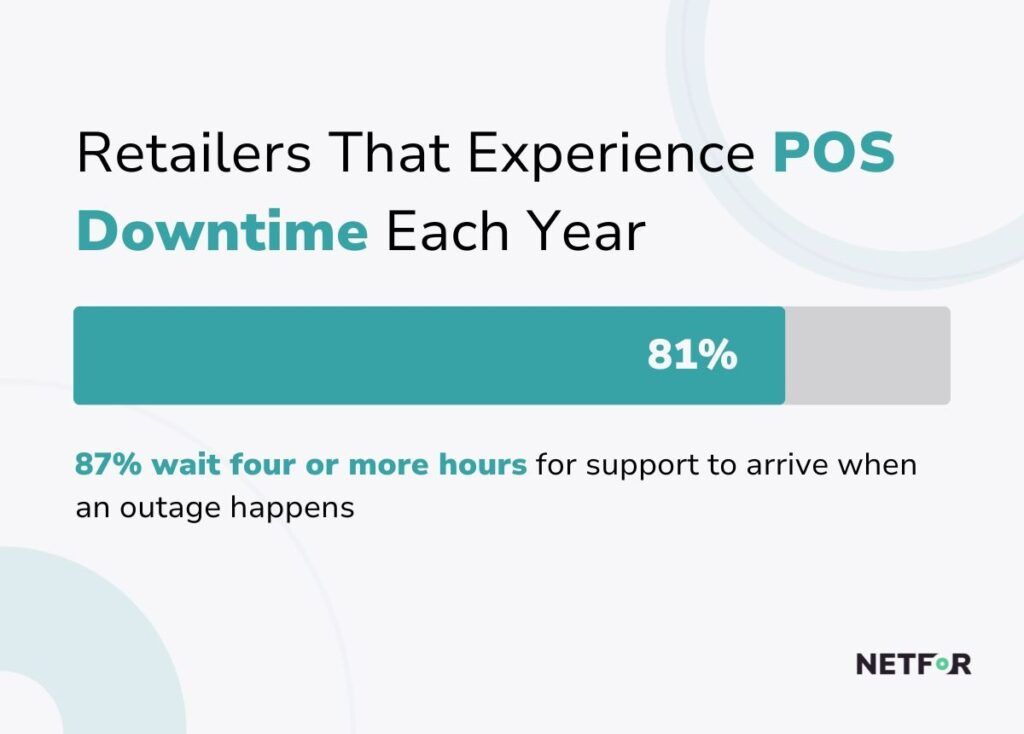
Professional POS installation services have become mission-critical as system downtime costs large retailers over $1 million per hour, yet 81% of retailers experience outages annually with 87% waiting four or more hours for support to arrive. For multi-location businesses, these failures are often preventable: they trace back to improper installation. From incorrect VLAN setup to incompatible hardware configurations, technical mistakes during deployment create system instability that leads to frequent outages and costly emergency service calls.
As modern POS systems evolve into comprehensive commerce platforms handling inventory, CRM, loyalty programs, and payment processing, professional installation has become mission-critical. With 41% of consumers refusing to wait where contactless payments are unavailable and 22% abandoning purchases due to slow checkout, the stakes of getting deployment right have never been higher.
Why Modern POS Systems Are More Complex Than Ever
The cash register has evolved into a comprehensive commerce platform. Today’s POS systems are the central hub controlling inventory, customer loyalty programs, CRM, and payment processing. This increasing complexity is driven by rapid technological advancements and shifting consumer behaviors, making professional POS system installation a mission-critical investment. The global POS software market is projected to grow from $16 billion in 2025 to over $29 billion by 2030, fueled by the adoption of mPOS and SoftPOS technologies.

SoftPOS, or Software Point of Sale, transforms a standard commercial smartphone or tablet into a secure payment terminal without needing extra hardware like card readers. This innovation is reshaping the payment landscape, with SoftPOS transactions projected to hit an incredible $540 billion by 2030, a growth of 2,150%. This shift demands new installation skill sets focused on Wi-Fi optimization, mobile device management (MDM), and robust network security to handle the surge in wireless transactions.
Consumer behavior is the primary catalyst for this investment. A significant 87% of shoppers prefer contactless payment options, and the rise of the “wallet-less” Gen Z consumer means businesses must flawlessly support Near Field Communication (NFC) payments or risk losing sales. At the same time, QSRs are leveraging AI-powered drive-thru POS systems, like Wendy’s FreshAI, to cut service times by 29 seconds and achieve 95% order accuracy. These sophisticated systems require specialized POS installation expertise.
To support these modern technologies, the underlying infrastructure must be robust. Key technical considerations include:
- Wi-Fi Density: Networks must be designed to handle a high density of mPOS devices without signal degradation or latency, ensuring transactions are processed instantly.
- Tablet and Device Security: Implementing Mobile Device Management (MDM) is crucial to secure, monitor, and manage the tablets and smartphones used as POS terminals.
- NFC Requirements: Terminals must have properly configured and tested NFC capabilities to support the growing demand for “tap-to-pay” from mobile wallets like Apple Pay and Google Pay.
- Bandwidth and Latency: Real-time synchronization of sales, inventory, and customer data requires low-latency networks with sufficient bandwidth to prevent data bottlenecks and slow transactions.
The Operational Cost of Poor POS Installation
POS system downtime is a direct hit to the bottom line. For large enterprises, downtime costs can exceed $1 million per hour, and the retail sector suffers more than any other industry. Even small businesses feel the sting, losing an average of $427 for every minute their systems are offline.
A surprisingly large number of these failures trace back to improper POS installation. Common errors like incorrect VLAN setup, leaving network ports open, or using incompatible hardware create system instability that leads to frequent outages. Furthermore, a lack of professional staging and kitting results in a high rate of Dead on Arrival (DOA) hardware due to shipping damage, causing significant deployment delays before an install even begins.
Checkout friction is another costly consequence. When transaction speeds fall below the industry benchmark of 40 seconds plus three seconds per item, customers walk away. Research shows 22% of shoppers will abandon their purchase if they encounter a slow or complicated checkout process.
Technical mistakes during a POS install can create lasting problems that impact both revenue and security:
- Transaction Speed Failures: Without proper network configuration and Quality of Service (QoS) prioritization for payment data, transaction times can lag, leading directly to customer frustration and cart abandonment.
- Network Segmentation Flaws: A flat network where POS devices share a connection with guest Wi-Fi or other systems is a major security risk. It allows for “lateral movement,” where an attacker who breaches a less secure part of the network can easily access the payment system, as seen in the infamous Target data breach.
- Incompatible Hardware Mixes: Attempting to pair new terminals with older peripherals without proper testing can create a “Frankenstein” system plagued by driver conflicts and intermittent failures, leading to constant support calls and unreliable performance.
The POS Installation Blueprint: How Proper Deployment Works
A successful, scalable POS installation project follows a meticulous, full-lifecycle workflow designed to minimize disruption and ensure first-time success. This process goes far beyond simply plugging in hardware and involves detailed planning, logistics, and technical execution. Professional POS installers follow a proven blueprint to guarantee consistency and reliability across every location.
The standard workflow for a professional POS system installation includes several key stages:
- Site Survey: Before any hardware is shipped, technicians conduct a thorough assessment of each location. This includes evaluating power sources, existing network infrastructure, and physical counter space to identify potential obstacles.
- Staging & Kitting: This is one of the most critical steps. All hardware is shipped to a central facility where it is unboxed, configured with the correct software image, updated with security patches, and tested. The components for each specific checkout lane are then repacked into a single “kit” and shipped to the store. This dramatically reduces on-site installation time and virtually eliminates DOA hardware.
- Physical Installation: On-site technicians mount terminals, route and secure cables, and connect all peripherals, including payment devices, scanners, and printers. For drive-thru systems, this includes installing ruggedized outdoor equipment designed to withstand the elements.
- Network Configuration: This is where technical expertise is vital. Technicians implement VLANs to isolate POS traffic, configure firewall rules to secure the network, and apply QoS settings to prioritize payment transactions.
- Software Provisioning & Testing: The POS software is loaded and synchronized with the central server. Technicians then run a series of tests, including processing mock transactions to ensure everything from the card reader to the receipt printer works perfectly.
- Ongoing Technical Support: After the installation, a reliable partner provides ongoing maintenance and help desk support to address any issues that arise, ensuring long-term operational stability.
By following a standardized process, businesses can achieve a high “first-run rate,” where installations are completed correctly on the first attempt. This not only reduces the mean time to repair (MTTR) for future issues but also lowers costs by minimizing the need for expensive follow-up technician visits (“truck rolls”). This structured approach has been shown to reduce store opening timelines from 120 days to just 90 days by ensuring predictable, repeatable results.
Compliance, Security & PCI: The High-Stakes Layer of POS Installation
In the world of payments, security is not optional. A secure POS installation is the first line of defense against cyberattacks, and failure to comply with standards like the Payment Card Industry Data Security Standard (PCI-DSS) can result in severe fines and reputational damage. Since 98% of retail cyberattacks are financially motivated, the POS system is a prime target.
The installation phase is where many critical vulnerabilities are inadvertently introduced. For instance, failing to change default administrator passwords during setup is a common mistake that accounts for 31% of POS credential theft incidents. Cybercriminals constantly scan networks for these default credentials to gain easy access. Another major risk is improper network segmentation. Without isolating the POS system on its own dedicated network, attackers can pivot from a less secure system (like the store’s HVAC controls or guest Wi-Fi) to the payment network, a technique used in major retail breaches.
A professional POS installation addresses these risks by embedding security and compliance into every step. Key technical practices include:
- PCI-DSS Aligned Configuration
- End-to-End Encryption (E2EE)
- VLAN Segmentation and Firewall Rules
- Hardware Security
We know those are some big technical terms, but when you trust your POS installation to experts who understand these requirements, you ensure your payment environment is functional, secure, and protected against the constant risk of data breaches.
Why Retailers Need a Professional POS Installation Partner
For retail and QSR businesses with multiple locations, consistency is key. A DIY or fragmented approach to POS installation, where different stores use different methods, creates a chaotic and unreliable technology environment. A professional partner with nationwide reach ensures that every POS install is executed to the same high standard, regardless of location. This is especially critical for large-scale rollouts, such as upgrading hardware across 500+ stores.
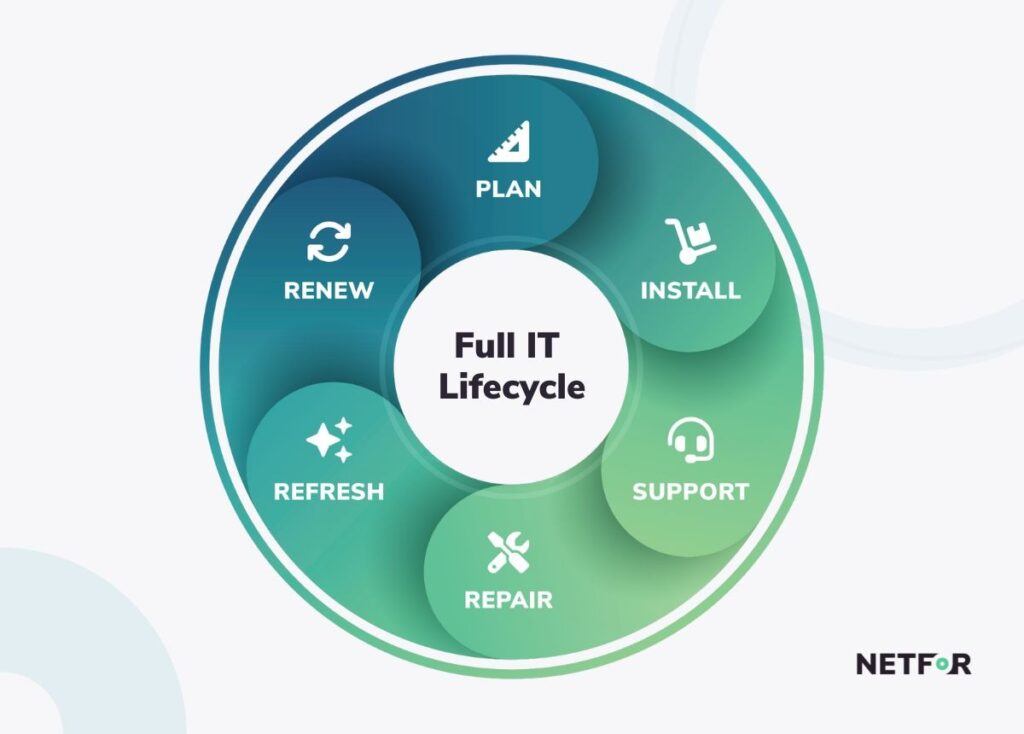
A true field service partner manages the entire lifecycle, from staging and kitting to installation, maintenance, and help desk support. Netfor, for example, combines nationwide field services, fulfillment logistics, and integrated help desk support, eliminating the multi-vendor coordination problems that typically cause delays and failures. This integrated approach, known as IT Lifecycle Management (ITLM), delivers significant operational savings, with some clients saving over $500,000 by consolidating services under a single partner.
The benefits of partnering with a professional for your POS installation services include:
- Rapid, Consistent Rollouts: A partner with a vetted national network of POS installers can deploy new systems across hundreds of locations on a tight schedule, ensuring every store goes live on time.
- Guaranteed Response Times: Professional partners offer Service Level Agreements (SLAs) that guarantee fast on-site support. For critical “store down” issues, a 4-hour P1 response time is the industry standard.
- Reduced Downtime and Higher Fix Rates: With centralized staging reducing DOA hardware and experienced technicians performing the installation, systems are more reliable from day one. This leads to higher first-time fix rates and a lower mean time to repair (MTTR) when issues do arise.
- Simplified Vendor Management: Working with a single partner for all your POS needs, from installation and mPOS technology transitions to ongoing support, frees up your internal IT teams to focus on strategic initiatives instead of managing multiple vendors.
Modernize Your Payments with Confidence
As we look toward the future, modern POS systems are mission-critical revenue-generating assets. Their technical complexity and the staggering cost of downtime mean that proper POS installation is one of the smartest investments a retail or QSR business can make. A standardized, secure, and professionally managed installation process dramatically reduces risk while improving the customer experience at every checkout.
Don’t let a complex technology refresh cycle disrupt your business. Contact Netfor to learn how our nationwide POS installation services can ensure your multi-location rollout is fast, secure, and ready for the new year.