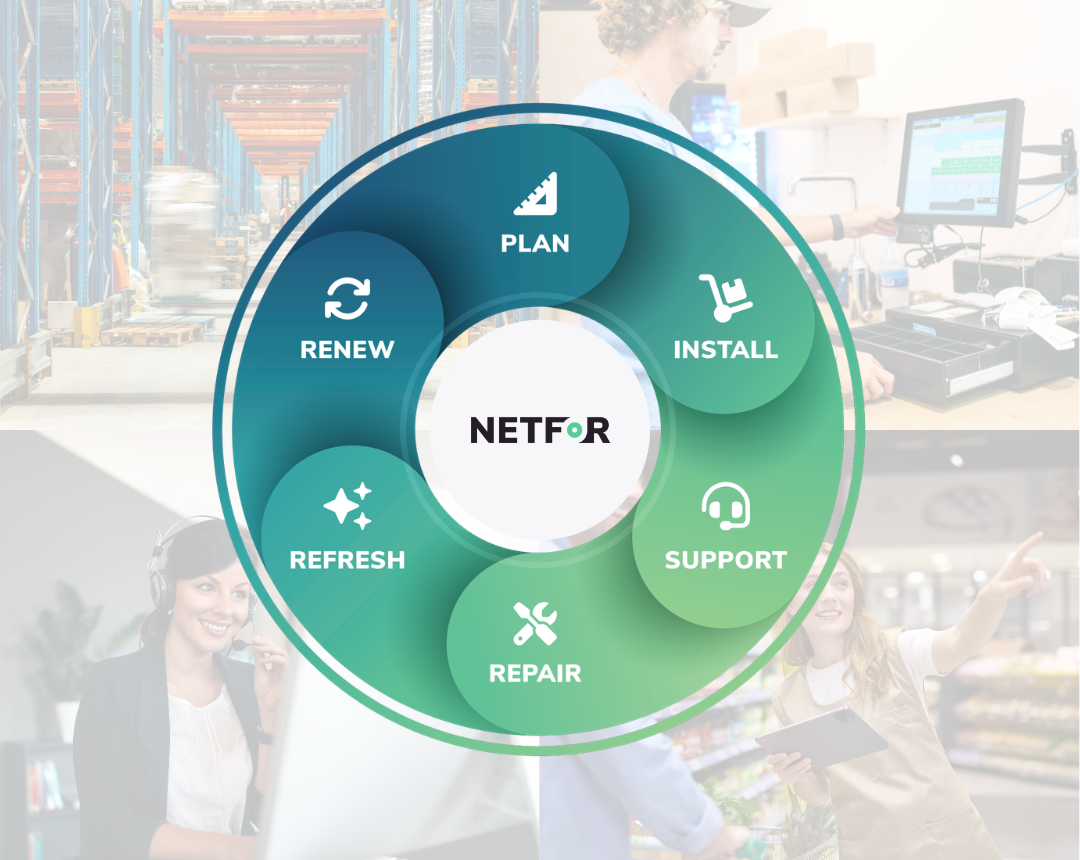
IT lifecycle management (ITLM) is the process of managing technology from procurement and deployment through ongoing support, maintenance, and eventual replacement. IT asset lifecycle management focuses specifically on tracking and optimizing each device throughout that lifecycle. For multi-location businesses, effective lifecycle management IT strategies reduce downtime, improve service consistency, and eliminate vendor fragmentation. The best IT lifecycle management service combines fulfillment, field services, and support into a single operating model, ensuring technology is deployed, supported, and maintained efficiently across every location.
Multi-location businesses are currently investing billions of dollars into new technology. Despite this massive capital commitment, 81% of retailers still experience system downtime at least once a year, and they often wait hours for support when these outages occur (Digi International, 2024).
Modern IT environments have grown highly fragmented across dozens of vendors, software tools, and regional service providers. This fragmentation leads to slower technology deployments, inconsistent help desk support, and rapidly rising downtime costs.
IT Lifecycle Management solves this problem. By centralizing procurement, deployment, support, and asset management into a single operating model, you can reduce vendor complexity and improve service delivery across every single location.
What is IT Lifecycle Management and Why It Matters Now
IT lifecycle management is the comprehensive practice of managing hardware and software from the moment of purchase until the equipment is finally retired.
IT Asset Lifecycle Management (ITAM) is a specific subset of this practice; it focuses on tracking and optimizing individual devices, such as routers or point-of-sale terminals, throughout their usable life.
Traditional IT support models treat deployment, maintenance, and disposal as separate events handled by different teams. A true lifecycle management IT approach connects these phases. The growing complexity of distributed IT environments makes this connection essential. Multi-location retail environments must manage complex point-of-sale systems, local networking gear, and employee endpoints simultaneously. Similarly, quick-service restaurant franchise operations rely completely on system uptime to generate revenue.
The industry reflects this growing need for structured management. The IT asset disposition market is expected to grow from $25.31 billion to $54.54 billion by 2030 (Grand View Research, 2024). At the same time, the ITAM software market will expand from $3.1 billion to $5.65 billion by 2033 (SkyQuest, 2024).
ITLM includes:
- Procurement and planning
- Fulfillment and staging
- Deployment and installation
- Ongoing support and help desk
- Maintenance and lifecycle optimization
- Decommissioning and asset recovery
The Hidden Cost of Vendor Fragmentation in IT Operations
Vendor sprawl across procurement, field services, help desk, and asset tracking creates severe operational bottlenecks. When you use different companies for staging, installation, and ongoing support, nobody has total visibility into the technology lifecycle.
This fragmentation causes operational inefficiencies and heightens your security risks. A typical organization manages an average of 83 security solutions across 29 different vendors (IBM, 2025). Furthermore, 40% of businesses use 50 or more SaaS tools, while 5% use more than 250 (TechRadar, 2025). Because these siloed systems do not communicate well, employees spend approximately 30% of their time simply searching for information across fragmented systems (IDC, 2024).
These gaps in tracking also lead to financial waste. Untracked equipment, known as ghost assets, can account for up to 30% of a corporate IT budget (Ivanti, 2024).
Vendor fragmentation leads to:
- Slower issue resolution due to complex handoffs
- Increased downtime from a lack of vendor coordination
- Higher costs from paying redundant vendors
- Increased cybersecurity exposure through the supply chain
The Cost of Downtime and Why ITLM Impacts Revenue
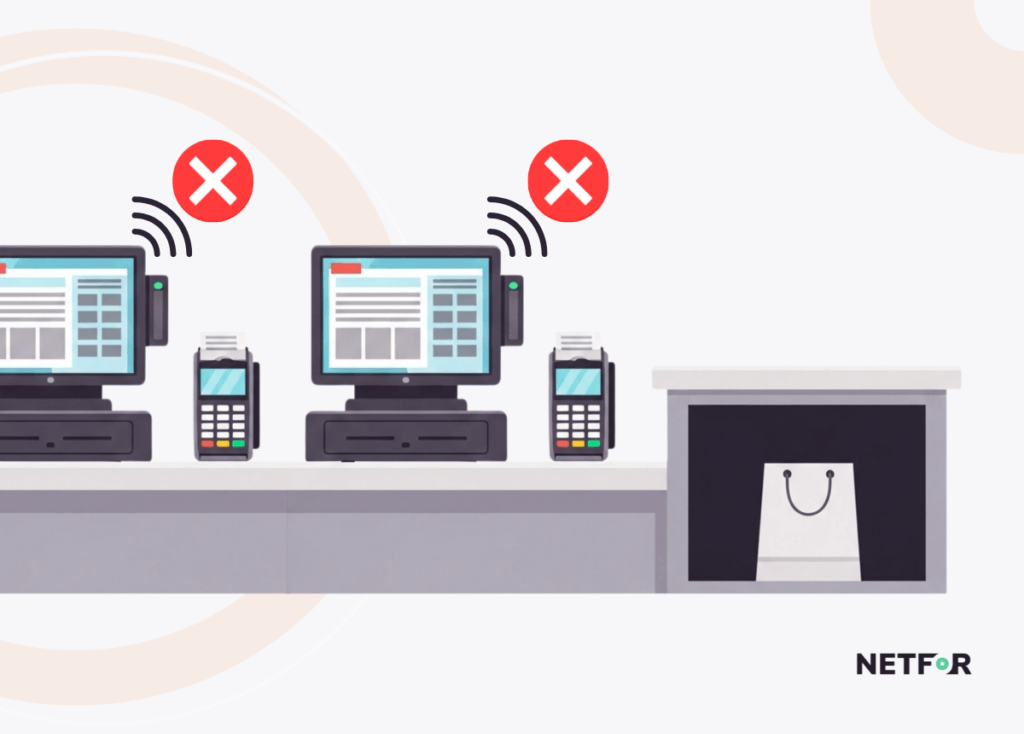
The direct financial impact of system downtime is staggering for distributed organizations. A simple point-of-sale outage at a single retail location quickly halts transactions, frustrating customers and causing immediate revenue loss. A multi-location outage impacting hundreds of stores can devastate quarterly earnings.
The average cost of IT downtime is now $14,056 per minute (EMA, 2024). For large enterprises, downtime costs can reach $1.4 million per hour (EMA, 2024). Retail organizations face standard downtime costs of $1.1 million per hour, which can spike up to $4.5 million during peak shopping periods (EMA, 2024). Even a localized point-of-sale outage costs an average of $4,700 per minute per location (Digi International, 2024).
These outages create operational ripple effects across your team. Engineers must abandon strategic projects to troubleshoot emergencies. More importantly, poor customer experiences damage brand loyalty, with up to 75% of consumers willing to switch brands after a poor service experience (McKinsey, 2024).
Downtime impacts:
- Lost revenue per store
- Customer churn and brand damage
- SLA financial penalties and refunds
- Internal productivity loss
Execution Layer: Why Field Services and Fulfillment Define Success
IT lifecycle management sounds great on paper. But none of it works without execution. This is where most companies run into problems.
You can have the right strategy, the right tools, and the right vendors, but if devices aren’t staged correctly, shipped on time, installed right the first time, or supported quickly when something breaks, everything falls apart.
Think about rolling out new technology across hundreds of locations. If a technician shows up without the right parts, installs something incorrectly, or has to come back multiple times, the timeline slips. Costs go up. Stores wait. Revenue is impacted.
That’s the reality of IT at scale. The difference isn’t just having field services, it’s how well they’re executed. Strong execution means:
- Devices are configured and ready before they ever leave the warehouse
- Technicians show up prepared and fix issues on the first visit
- Coverage exists nationwide, not just in major markets
- Scheduling and dispatch happen fast, without delays or confusion
When fulfillment, field services, and support are all connected, things move faster. Deployments stay on track. Issues get resolved quicker. Stores stay up and running. This is where a lot of IT lifecycle strategies break down, and where the right partner makes the biggest difference.
Best Practices for IT Asset Lifecycle Management and Consolidation
Execution is only part of the equation. The other piece is visibility. If you don’t know what you have, where it is, or what condition it’s in, you’re always reacting instead of staying ahead. That’s where IT asset lifecycle management comes in.
From the moment a device is ordered to the day it’s replaced, every step needs to be tracked. Not just for inventory, but so you can plan ahead, avoid failures, and keep stores running without surprises. The problem is, most companies try to manage this across multiple vendors.
One partner handles procurement. Another handles installs. Someone else owns support. Maybe there’s a separate tool tracking assets.
Now instead of one system, you’re managing handoffs. That’s where things break:
- Devices show up unconfigured
- Installs get delayed
- Support teams don’t have context
- No one owns the full lifecycle
When everything is connected under one partner, it works differently. You’re not chasing vendors. You’re running a system.
- Devices are tracked from day one
- Deployments are coordinated, not reactive
- Support teams know the full history of the asset
- Refresh cycles are planned, not rushed
This is where IT lifecycle management actually delivers value. It’s not just about managing assets. It’s about making sure every part of the lifecycle works together, so your operations don’t have to slow down.
Comparing IT Lifecycle Management Models
When evaluating how to manage your technology lifecycle, you generally face three choices: a multi-vendor model, internal IT lifecycle management, or a consolidated partner approach.
The multi-vendor approach relies on best-of-breed point solutions. You might use one for enterprise architecture modeling, one for third-party maintenance, two Global for asset recovery, and one for global procurement. This approach provides niche expertise but requires a massive coordination effort from your internal staff.
An internal IT lifecycle management model gives you maximum control. Your own employees handle fulfillment, deployment, and support. However, this model rarely scales well across hundreds of geographical locations.
A consolidated ITLM partner model works best for multi-location businesses. A partner like Netfor combines Business Process Outsourcing services, fulfillment, AI-enabled help desk support, and nationwide field services into one integrated workflow.
Fragmented model:
- High complexity and administrative burden
- Multiple conflicting service level agreements
- Slower issue resolution times
Netfor’s ITLM model:
- Single point of accountability
- Faster nationwide deployments
- Reduced downtime through integrated support
IT asset lifecycle management best practices:
Best practices focus on having full visibility and control from start to finish. That means knowing what assets you have, where they are, and how they’re performing at all times. Strong organizations standardize how devices are ordered, configured, deployed, and supported so there’s consistency across every location. Automated tracking helps eliminate guesswork and reduces manual errors, while proactive refresh planning ensures equipment is replaced before it fails, not after it causes downtime.
What is the best IT lifecycle management service?
The best IT lifecycle management service brings everything together under one operating model. Instead of separating fulfillment, field services, and support across different vendors, it connects them into a single system. Devices are staged and deployed correctly, technicians have the right information in the field, and support teams have full context when issues arise. This reduces delays, eliminates handoffs, and improves overall performance across every location.
Transform Your Service Delivery Today
Modern IT environments are growing more complex, and system downtime costs are increasing across all major industries. To protect revenue and ensure a consistent customer experience, organizations must address vendor fragmentation head-on. Vendor consolidation dramatically improves operational efficiency and reduces overall business risk.
Organizations that adopt a centralized ITLM strategy experience reduced downtime, improved service delivery, and lower operational costs. A unified lifecycle approach eliminates the dangerous gaps between vendors and creates a highly scalable technology model.
Take the next step in optimizing your operations. Explore how a single partner approach to IT lifecycle management can simplify your technology footprint and elevate service delivery across every location you operate.